CONEST • CONCEPT
ROLE
Product Designer
timeline
Jan-April 2025
TEAM
Amruta Ranade (Mentor)
Solo Designer
skills
User Research
Product design
OVERVIEW
Finding someone to live with is often a shot in the dark
Who you live with and where you live affect your sleep, your safety, and your peace of mind. The information needed to make a good decision about the space or the person is rarely available up front. And when it is, there's no way to know if it's real.
SOLUTION
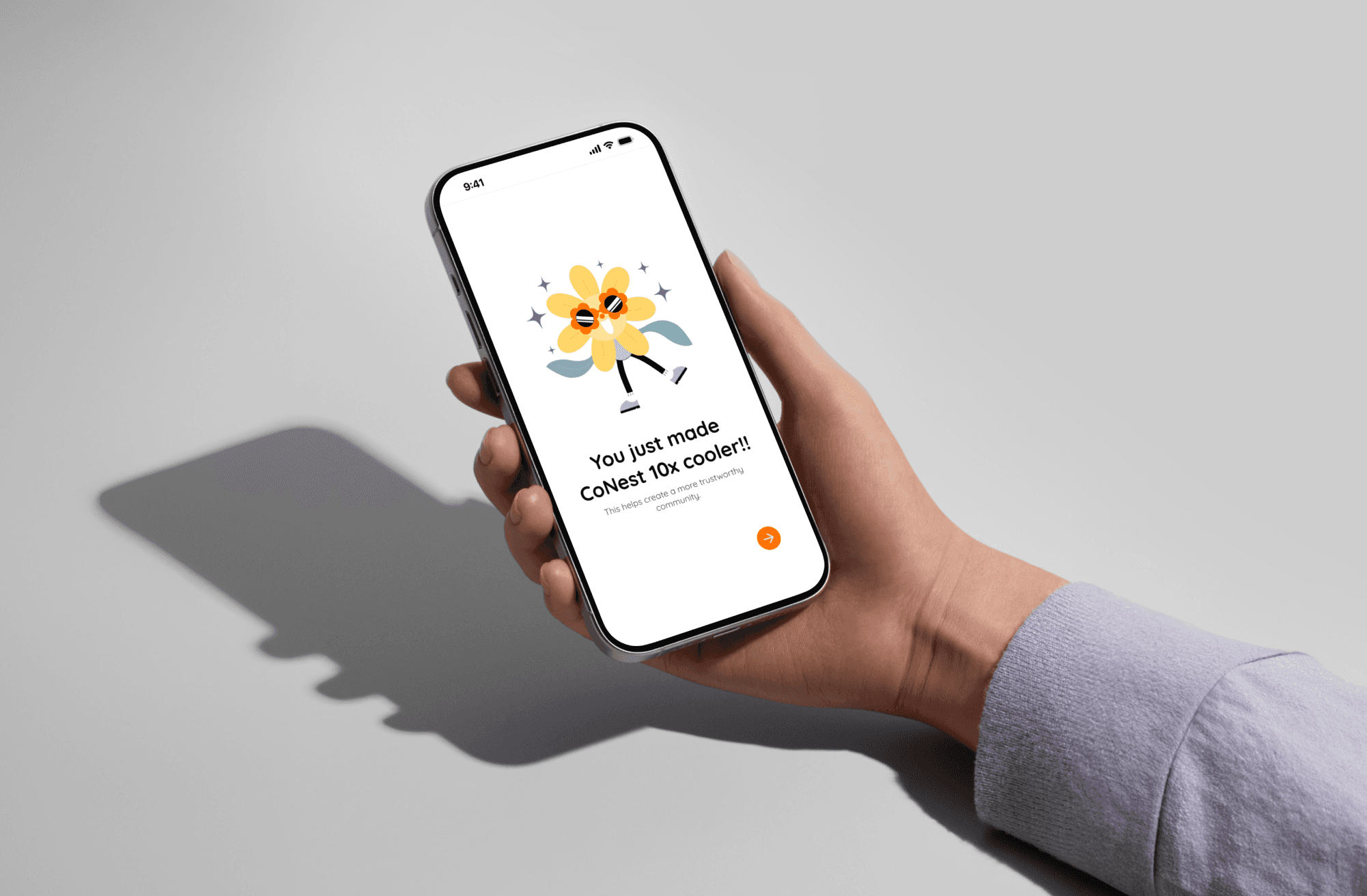
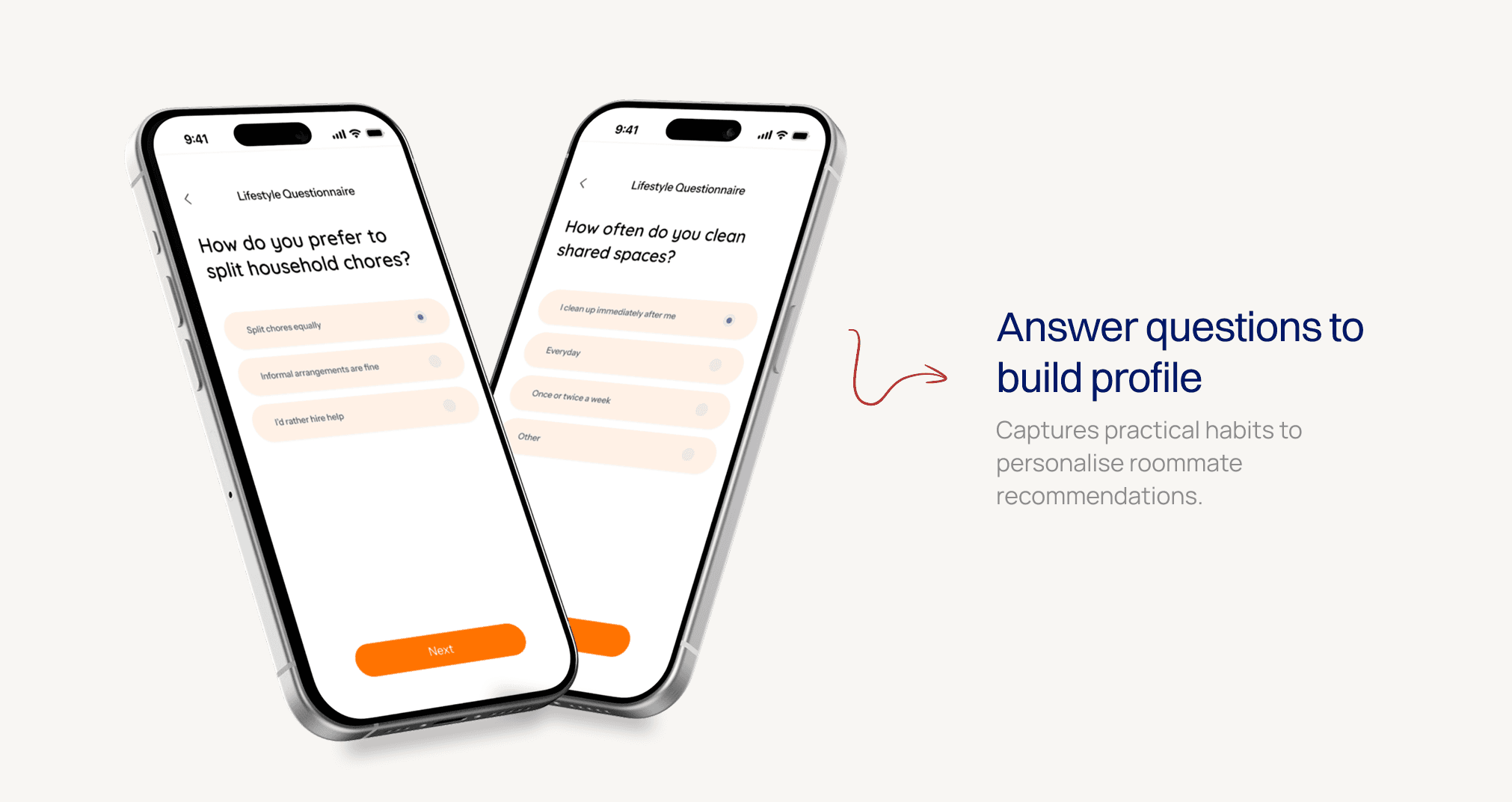
CoNest is a shared-living app for students and early professionals that helps users find matches based on day-to-day habits like cleanliness, schedules and guest policies, so you're not judging a living situation through rent, photos, and instinct alone.

BACKGROUND & PROBLEM
How do you even know it's real?
You're moving to a new city. Your job starts in three weeks. You don't know anyone. The listings are outdated, the photos are misleading, and brokers won't tell you who you'd be living with until after you've committed to the space. So you do what everyone does: ask around, stalk profiles on Instagram, and try to read between the lines of a two-line WhatsApp message from a stranger.
In the survey:
RESEARCH
Almost anyone could end up needing a roommate: students, working professionals, people moving cities, and people going through difficult life changes. But that's too broad to design around.
I mapped out six segments and looked for what they had in common. The strongest pattern emerged around students and early professionals. They were often making independent housing decisions for the first time, budget-sensitive, with limited time to evaluate options. That's who CoNest is built for.
INSIGHTS
KEY INSIGHT #1
Users built their own trust systems
KEY INSIGHT #2
Compatibility is about habits, not personality
KEY INSIGHT #3
The search is tedious and emotionally draining
scope
Help people make fewer bad decisions earlier in the process
It was tempting to solve everything from discovery to move-out, including contracts, bills, and chore tracking. But mapping the full journey made it clear that the most damage was occurring before people moved in. Most tools assume "if you show enough listings, the user will figure it out." But my participants were already overwhelmed with options and undersupported in judging their fit.
CoNest focuses on onboarding and compatibility profiling, discovering potential matches, and building trust before commitment.
CORE FLOWS
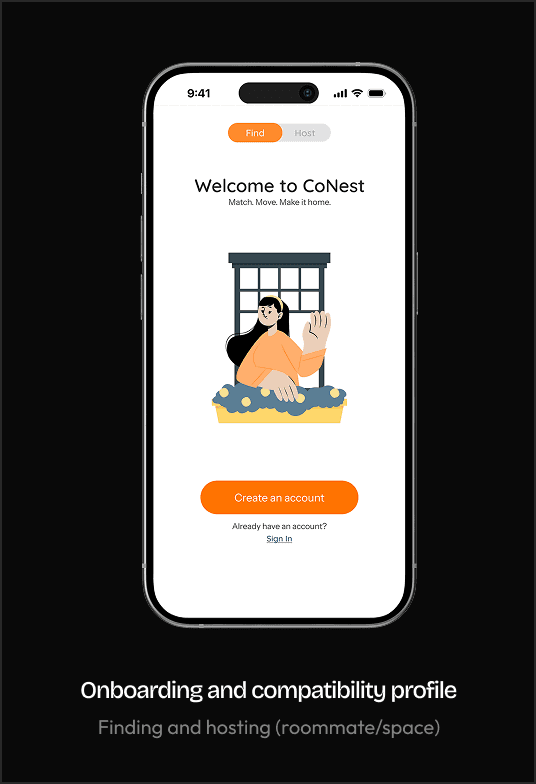
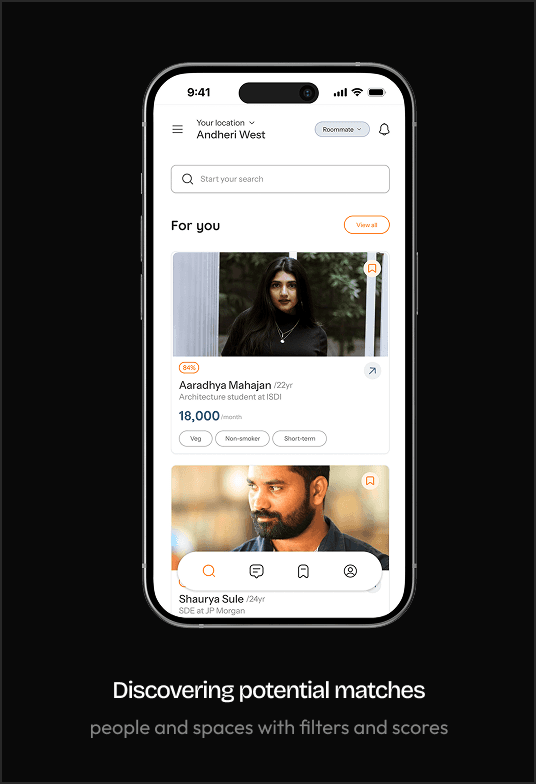
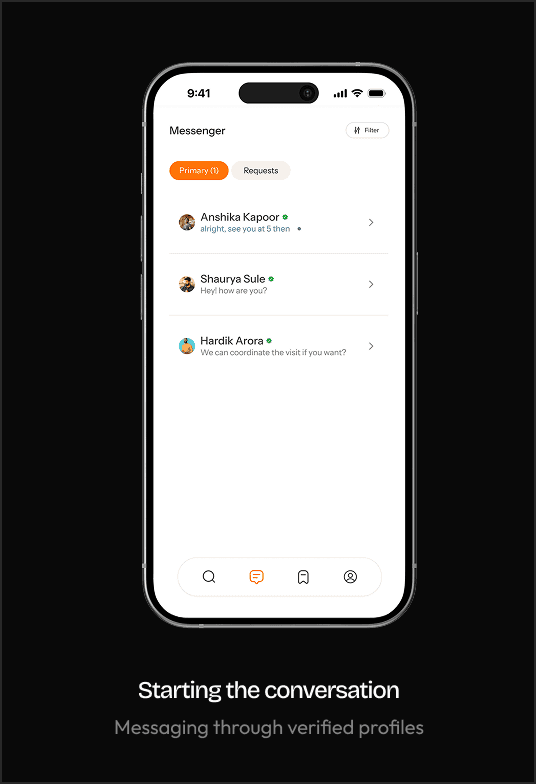
DESIGN DECISIONS
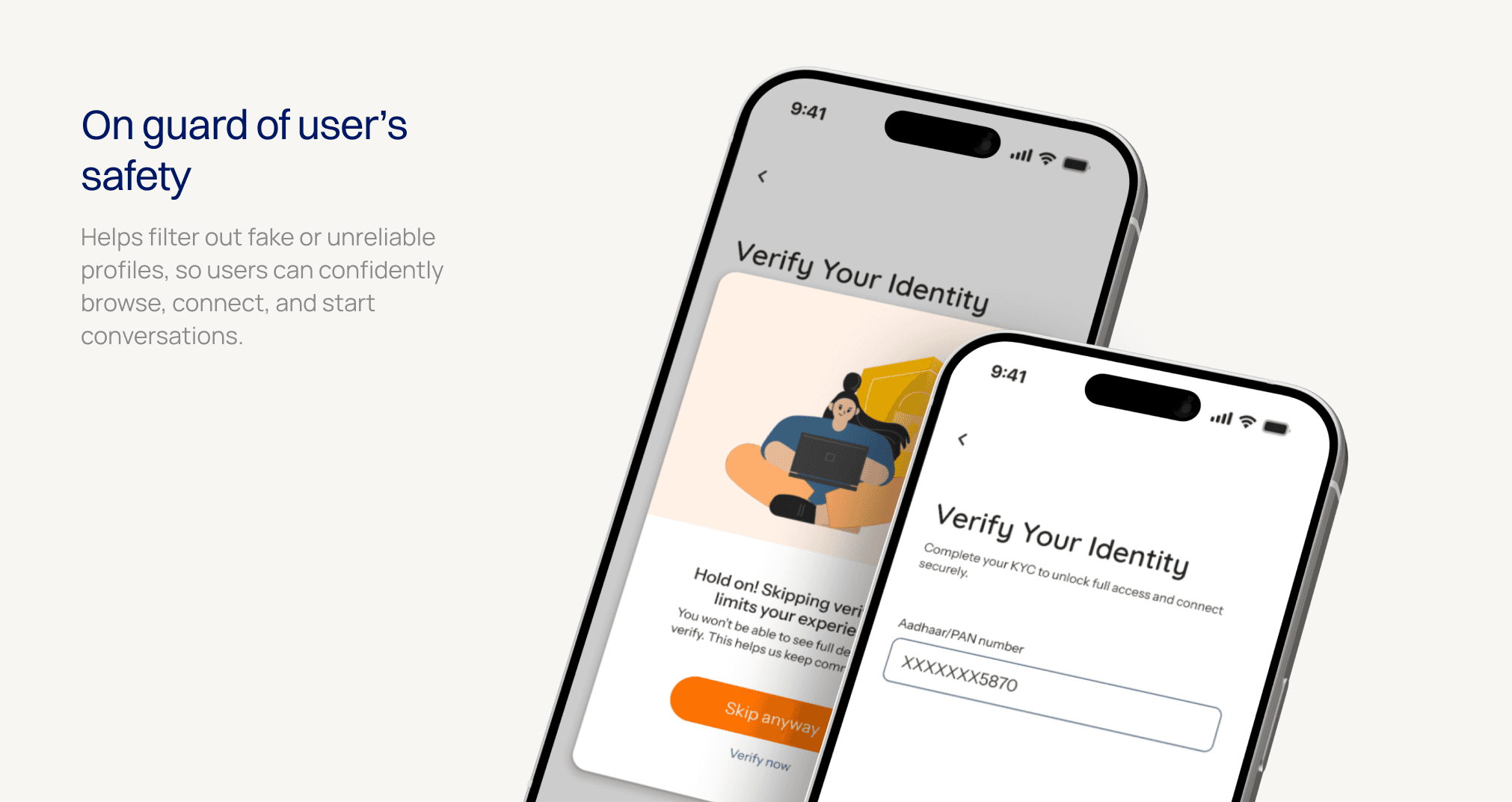
Where to place KYC verification. It was essential for trust, but added friction alongside the compatibility questionnaire.
Let users explore first, then require verification before viewing full details. This reduced upfront friction while maintaining security where it matters most.
outcome



TAKEAWAY & REFLECTION
This was the first time I ran research from scratch. I made mistakes along the way, including asking leading questions and missing opportunities to probe deeper.
The biggest takeaway was that people don't always articulate their real problems directly. You have to recognise behaviours underneath and understand how those patterns should influence decisions.
Mentorship and repeated critique shaped a lot of this. Having someone challenge my assumptions helped me see blind spots I would have otherwise missed.